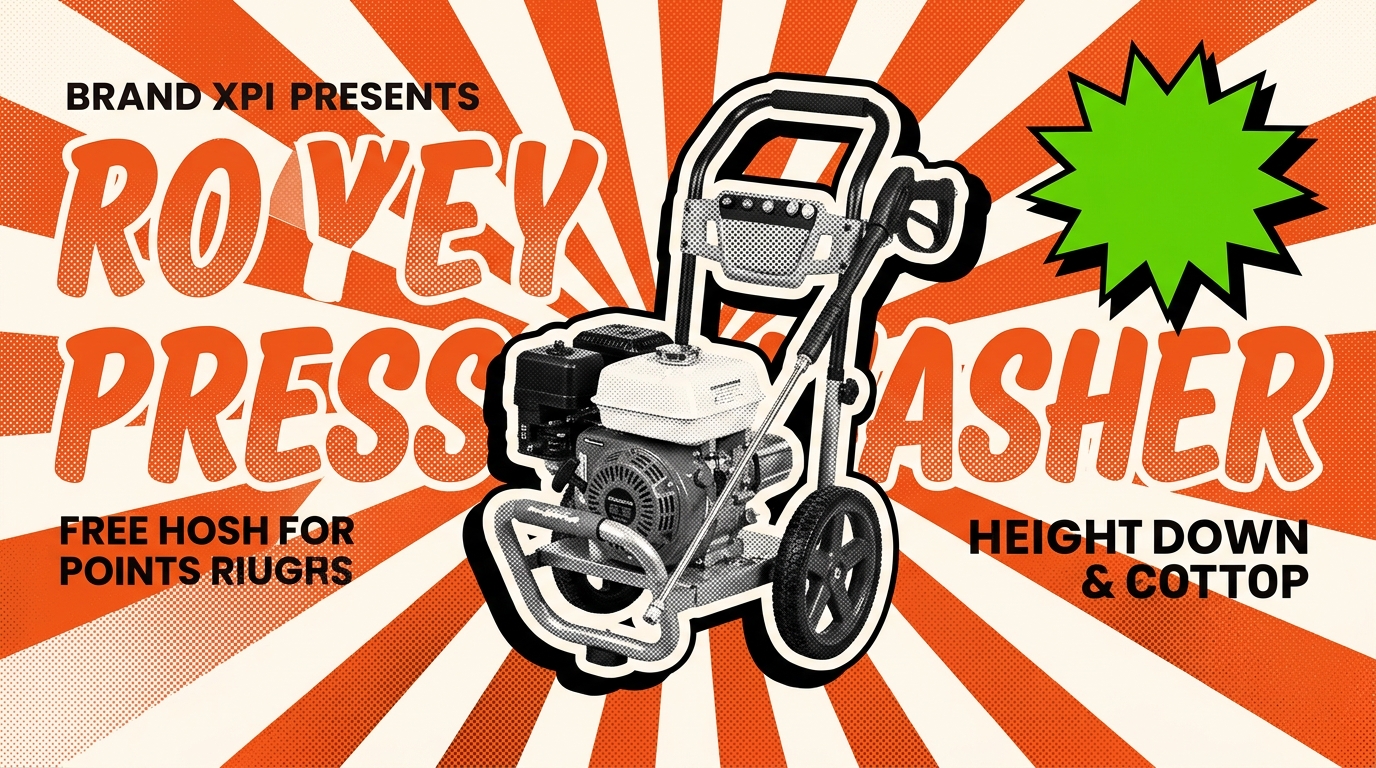
A 66 percent discount on a gas pressure washer sounds like the kind of number that evaporates the moment you look closely. In this case, the Givimo 2900-PSI Gas Pressure Washer held up when Gazoobie's AI ran it through the filter. The price is real, the specs are documented, and the timing, fall in the Northern Hemisphere, is about as practical as it gets for anyone with a driveway, a deck, or a vehicle that has been sitting through a humid summer.
The Givimo 2900-PSI gas pressure washer is a solid buy at 66% off for homeowners and small-business owners who need mobile cleaning power for driveways, siding, patios, and vehicles. Verify GPM and PSI specs match your intended use before checkout.
If you need a gas-powered washer for cars or light cleaning, the aluminum pump and included nozzle set make this a solid buy at two-thirds off. Just verify the GPM and PSI specs match your intended use before checkout.
GET THE DEALWhy the Discount Survived Curation
Most deal sites republish whatever number a merchant sends them. Gazoobie does not. Its AI cross-references live affiliate feeds against comparable units and flags anything where the discount is inflated by a fictitious original price. This one passed. The 66 percent figure reflects a meaningful gap between the Givimo's current price and what comparable gas washers in this PSI range sell for at major retailers, not a markdown from a number that was never real.
That does not mean you skip the details. It means the price is worth your time to verify against your own use case, which is what the next section is for.
The Specs to Confirm Before You Buy
PSI measures force. GPM measures volume. You need both numbers to know whether a washer will actually do the job you have in mind, and the two interact in ways that the headline spec alone does not tell you.
The Givimo is rated at 2900 PSI. That puts it in a middle tier, above the lightweight electric units most people start with, and below the commercial-grade machines running 3400 PSI or higher. For cleaning car exteriors, wooden decks, vinyl siding, patio pavers, and residential driveways, 2900 PSI is enough. For stripping paint, cleaning heavy construction equipment, or blasting deeply embedded stains from concrete, it may fall short.
Also confirm that your water source can supply the required inlet flow. Gas washers draw more water than most people expect. If your outdoor spigot runs low, the pump cavitates, which shortens its life considerably.
Gas Versus Electric: The Real Question
Electric pressure washers have gotten genuinely good in the last few years. If your cleaning happens near an outlet, you weigh under 200 pounds, and you are not working on large surface areas, an electric unit is simpler, quieter, and cheaper to run. Gas makes sense in a specific set of circumstances.
- You clean away from any power source, in a driveway, a parking area, a barn, or a job site.
- Your cleaning sessions run long enough that cord management becomes a real problem.
- You need consistent pressure across a wide area without stopping to wait for motor recovery.
- You want the machine to handle multiple users or light commercial frequency without burning out.
If two or more of those apply to you, a gas washer is the right category. At 2900 PSI with a 4-stroke engine and aluminum pump, this Givimo sits at the practical end of that category, not the industrial end. That is actually a feature, not a limitation, because it keeps the weight and fuel consumption manageable for a single person running it solo.
Aluminum Pump: Why the Material Matters
Budget gas washers at this price point routinely cut costs on the pump housing. Plastic pump housings crack under thermal stress, corrode from detergent contact, and do not dissipate heat as efficiently during long runs. An aluminum pump handles all three of those problems better. It also signals that the manufacturer built the unit expecting actual use rather than occasional light spraying.
This is not a minor spec line. A pump failure on a pressure washer often costs more to repair than the machine is worth at that point, and cheap housings fail first. When a deal-priced washer lists an aluminum pump, it is worth paying attention to.
What Comes in the Box
The Givimo includes a nozzle set with the unit. That matters for two reasons. First, swapping nozzles is how you change from high-pressure stripping to wide-angle rinsing to soap application. A washer without the right tips forces you to buy them separately, which chips into the savings. Second, the tips that come bundled with a machine are usually matched to that unit's PSI range, which removes the guesswork of finding compatible aftermarket nozzles.
The included nozzle set covers the standard angles a homeowner actually uses. You get options for tight stripping work, general cleaning, wide-fan rinsing, and detergent application. Compare that to buying tips separately at a hardware store and you are looking at 20 to 50 dollars added to the true cost of a washer that does not include them. That cost is already absorbed here.
Fall Is When This Makes the Most Sense
Fall outdoor cleaning is not optional in most of the country. Gutters carry debris from summer growth. Decks collect mold and algae before winter sets in and freezes it into the wood grain. Driveways show oil stains, tire marks, and months of grime. Siding picks up dirt, pollen, and biological growth that, left through winter, becomes harder to remove in spring.
Buying a pressure washer in fall also means you have it for spring, when most people suddenly want one and prices respond accordingly. A machine purchased now, before that demand spike, keeps its value as a tool even if the sale price eventually rises back.
Who Should Actually Buy This
At 2900 PSI, this washer is well-matched to four types of buyers. Homeowners who do their own exterior maintenance once or twice a year. Car owners who want to wash thoroughly without a garden hose and a sponge. Small-business owners who clean equipment, vehicles, or outdoor surfaces as part of routine upkeep. And anyone who has been borrowing a neighbor's washer and knows they need their own.
It is not the right machine for someone running a professional pressure washing service at high daily volume. That buyer needs a 3400-PSI-or-higher unit with a commercial-grade pump and a larger fuel tank. For everyone else, paying full price on a commercial machine to handle a residential workload is a waste. Two-thirds off a 2900-PSI washer with an aluminum pump and a complete nozzle set is a better fit for what most people actually need.